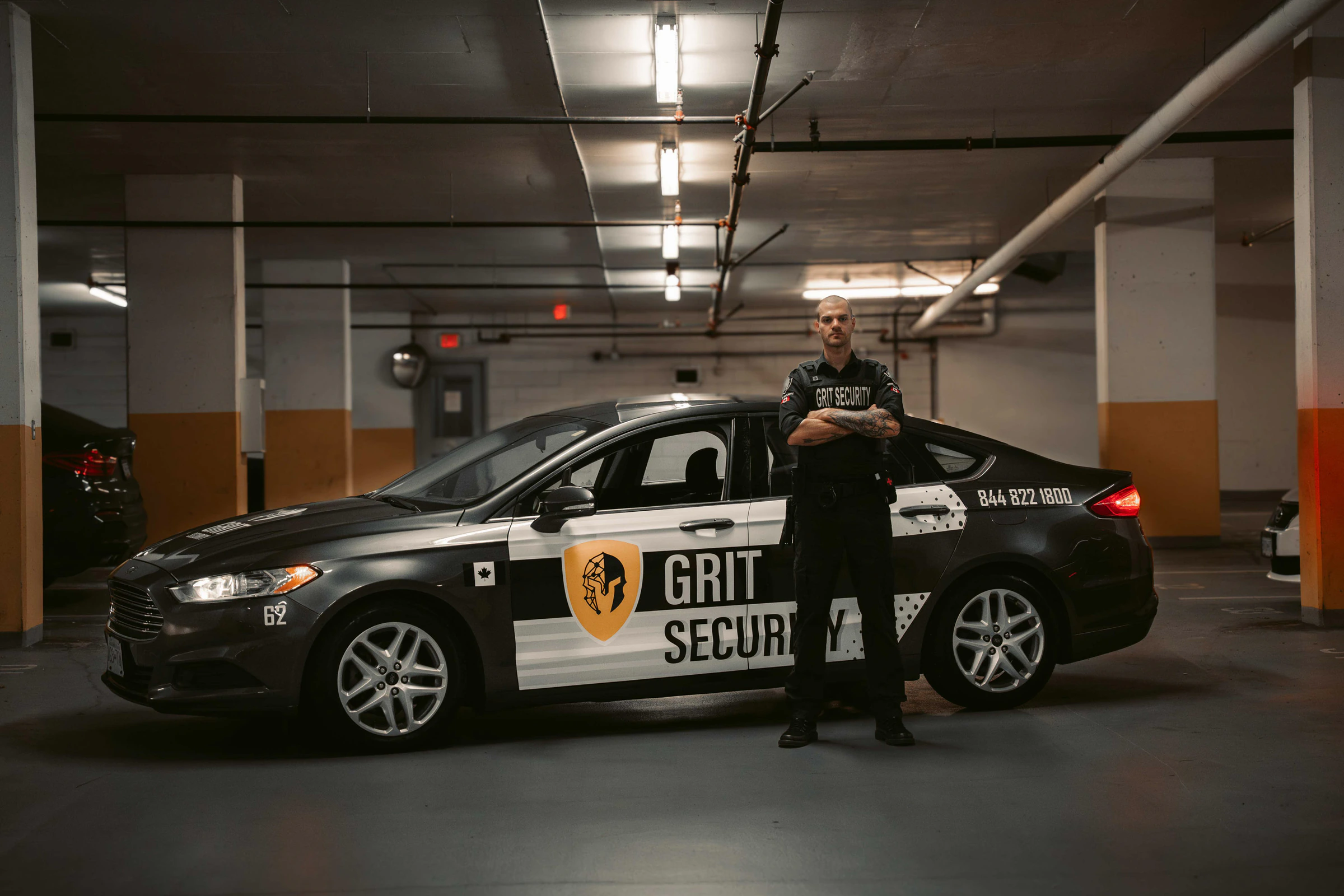
Choosing between mobile patrol and an on-site security guard is not simply a question of which option is better. Each model is designed for a different level of presence, responsibility and response. The right choice begins with the duties the property needs completed.
What mobile patrol provides
Mobile patrol security uses marked vehicles and licensed officers to attend a property at scheduled times, within randomized windows or in response to an approved request. A patrol can include exterior and interior checks, doors and gates, parking areas, loading zones, lock and unlock duties, alarm response, vacancy checks and documented observations.
Because one officer can attend multiple properties during a shift, mobile patrol is often practical when a site needs periodic oversight rather than uninterrupted presence.
What an on-site guard provides
An on-site security guard remains at or within the property for an assigned shift. This model suits continuous attention, regular interaction, active access control, repeated patrols or immediate availability.
Compare the models by operational need
Visible presence
A fixed guard provides continuous visibility. Mobile patrol creates repeated visible attendance, and randomized timing can make the exact visit less predictable. If someone must be present at every moment, fixed coverage is the correct starting point.
Response availability
An on-site guard can respond immediately within the property. A mobile officer must travel to the site, so access instructions, contacts and escalation steps should be established in advance.
Public and tenant interaction
Properties with constant visitor questions, contractor arrivals or tenant access issues generally benefit from an on-site position. Mobile patrol is better suited to inspections and response duties that do not require a continuously staffed desk.
Coverage cost
Pricing depends on scope, schedule, travel, property size, duties and supervision. Mobile patrol can be economical for several checks, but a lower-cost model is not useful if it cannot complete the required duties.
Verification and reporting
Both models should produce clear records. Grit Security uses TrackTik to support GPS activity, time-stamped checkpoints, notes, photos where appropriate and incident reports.
When mobile patrol often fits
- After-hours commercial property checks
- Vacant sites or suites requiring documented attendance
- Construction sites outside active hours
- Parking facilities needing visible patrols
- Warehouses, gates and yards requiring lock checks
- Multi-site portfolios needing a consistent route
- Alarm response or lock and unlock duties
When an on-site guard often fits
- Busy entrances requiring continuous access support
- Sites with frequent public, tenant or contractor interaction
- Retail locations requiring active loss prevention
- Construction entrances with ongoing traffic
- Properties requiring immediate on-site response
- Events or operations with restricted zones
A hybrid plan may be stronger
A commercial building may use a guard during business hours and mobile patrol after closing. A construction project may use a gate guard during deliveries and randomized patrols overnight. The hybrid approach works when responsibilities and handovers are defined clearly.
How to decide
List every required duty, the time it must happen, its frequency and the maximum acceptable response time. Then ask whether those duties require continuous presence or can be completed during planned visits.
Grit Security can review properties in Vancouver, Burnaby, Richmond, Surrey, Langley, Coquitlam, Delta and New Westminster and recommend fixed, mobile or combined coverage. Request a site-specific consultation.