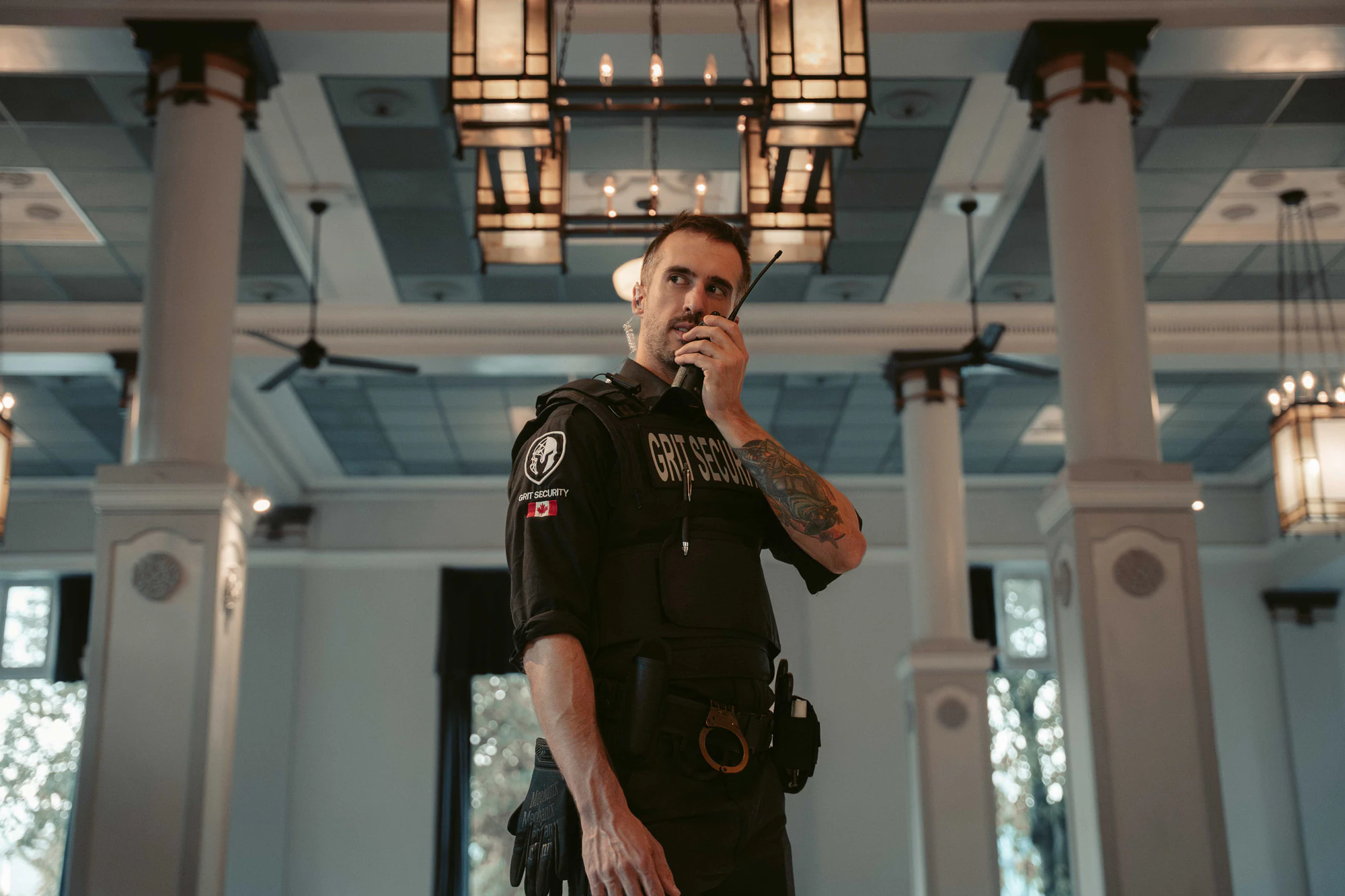
Event security begins well before doors open. A strong deployment plan connects venue layout, attendance, schedule, entrances, restricted spaces, organizer responsibilities and emergency procedures into one operating picture.
The aim is to protect people, property and operations while keeping the guest experience organized and welcoming.
Build the plan around the timeline
Divide the assignment into setup, staff and vendor arrival, guest entry, active programming, peak movement, closing and teardown. Entry may require line and credential support; active hours may need roving patrols and restricted-area coverage; closing may require orderly exits and equipment protection.
Map every controlled point
Identify public entrances, staff access, vendor doors, loading areas, backstage zones, emergency exits, parking, ticketing points and rooms requiring authorization. For each location, define who may enter and who decides exceptions. Document handoffs with venue staff, ticketing personnel or volunteers so guests do not receive conflicting direction.
For venues with permanent credentials, staff-only doors or recurring events, access control solutions can support the written entry process. Technology should reinforce—not replace—clear authorization and escalation rules.
Estimate staffing by duty, not attendance alone
Attendance matters, but venue shape, entrances, program type, restricted zones, schedule, audience profile, emergency routes and organizer requirements also affect staffing. A smaller event spread across several spaces may require more coverage than a larger event in one controlled room.
Separate event-facing positions from any continuous property-protection duties. If a venue also needs overnight, loading-area or asset coverage, define whether uniformed security guards will remain after public-facing positions close.
Set a communication structure
Identify the event decision-maker, venue representative, security supervisor, medical contact where applicable and emergency access procedure. Personnel should know what requires immediate communication and what belongs in routine reporting.
Prepare entry and guest-management procedures
Event security personnel can support line organization, ticket or credential checks, assigned bag-policy procedures, guest direction and restricted-area control. Before entry, confirm prohibited-item rules, re-entry, accessibility routes, VIP or staff credentials, media access and dispute escalation.
Plan for changing conditions
Weather, delays, attendance surges, technical issues and transportation changes can affect movement. Identify alternate entrances, waiting areas where relevant, supervisor authority and the process for repositioning personnel.
Document escalation and emergency support
The plan should state when organizers, venue management or emergency services must be contacted. Keep emergency routes clear and ensure personnel understand their role’s limits. Incident reports should capture observable facts, location, time, people notified, actions taken and follow-up. Grit Security uses TrackTik to support time-stamped notes and incident documentation.
Do not overlook closing and teardown
Guest departure, rideshare pickup, parking movement, vendor access, equipment movement and contractor teardown may all require attention. Confirm when each position can close and which areas need coverage until handover.
What to share when requesting an event security plan
A provider can prepare a more useful deployment when the organizer supplies operational details early. Include:
- Event date, venue address and full operating schedule
- Estimated attendance and expected peak arrival time
- Venue map, entrances, exits and restricted areas
- Ticket, credential, re-entry and prohibited-item procedures
- Alcohol service, VIP, media or vendor access requirements where applicable
- Organizer, venue, medical and emergency contacts
- Setup, teardown, parking and equipment-protection needs
Record material changes after the plan is approved. A revised entrance time, added performance area or new vendor route can affect positions and communication even when attendance remains the same.
Event security planning checklist
- Final schedule and attendance estimate
- Venue map with public, staff, vendor and emergency access
- Staffing positions and supervisor structure
- Credentials, entry rules and restricted-area procedures
- Organizer, venue and emergency contacts
- Communication equipment and channels
- Incident escalation and documentation
- Closing, departure and teardown responsibilities
Frequently asked questions
How far in advance should an event security plan be finalized?
Finalize the working plan early enough to confirm staffing, venue procedures, contacts and equipment, then review it again after major schedule or attendance changes. Larger, multi-day or multi-zone events generally need more lead time than a single-room private function.
Is attendance enough to determine the number of guards?
No. Attendance is one input. Entrances, venue layout, restricted zones, program type, timing, audience profile, venue rules and the duties assigned to each position can all change the required deployment.
Who makes decisions when the schedule changes during the event?
The plan should name an organizer decision-maker, venue contact and security supervisor. It should also define who may move positions, approve access exceptions and extend coverage so personnel are not relying on conflicting instructions.
Grit Security supports private, corporate, community and venue events across Vancouver and the Lower Mainland. Request a consultation with the event date, venue, estimated attendance and coverage hours.